
For many people having chemotherapy with oxaliplatin, one of the side effects they worry about is peripheral neuropathy – the numbness, tingling, pain and sensitivity that can affect the hands, feet and sometimes the mouth and throat.
A study published in ESMO Open investigated whether cooling the hands and feet during oxaliplatin treatment could help reduce these side effects. The results were encouraging, with patients who received continuous hand and foot cooling experiencing significantly less moderate or severe peripheral neuropathy than those who did not receive cooling.
In this article, we explain what the study found in simple terms and what it could mean for people receiving oxaliplatin chemotherapy.
What is oxaliplatin-induced peripheral neuropathy?
Oxaliplatin is a chemotherapy drug commonly used to treat cancers of the digestive system, including bowel and colorectal cancers.
One of its recognised side effects is oxaliplatin-induced peripheral neuropathy (OIPN). This can cause symptoms such as:
Numbness or tingling in the fingers and toes
Pain or discomfort in the hands and feet
Increased sensitivity to cold
Difficulty handling cold objects or drinks
Cold sensations or discomfort in the mouth and throat
There are two types of neuropathy associated with oxaliplatin.
Acute neuropathy usually happens during or shortly after chemotherapy and can be particularly noticeable when exposed to cold.
Chronic neuropathy can develop or become more noticeable as treatment continues. Symptoms can sometimes continue for months after chemotherapy has finished.
For some patients, neuropathy can become significant enough to affect everyday activities or mean that chemotherapy treatment needs to be adjusted.
What did the study investigate?
Researchers at University Hospitals Leuven in Belgium wanted to find out whether cooling the hands and feet during oxaliplatin chemotherapy could reduce peripheral neuropathy.
The study was a randomised controlled trial involving 77 patients receiving oxaliplatin-based chemotherapy for cancers of the digestive system.
Patients were randomly divided into two groups:
39 patients received hand and foot cooling using hilotherapy
38 patients received standard care without cooling
The patients receiving cooling used a Hilotherm ChemoCare system to continuously cool their hands and feet to 11°C. The cooling started 30 minutes before oxaliplatin was administered and continued during the infusion and for 30 minutes afterwards.
The researchers then followed the patients to see how frequently they developed moderate or severe peripheral neuropathy and how they experienced the treatment.
What did the researchers find?
1. Fewer patients developed moderate or severe neuropathy
This was one of the most important findings of the study.
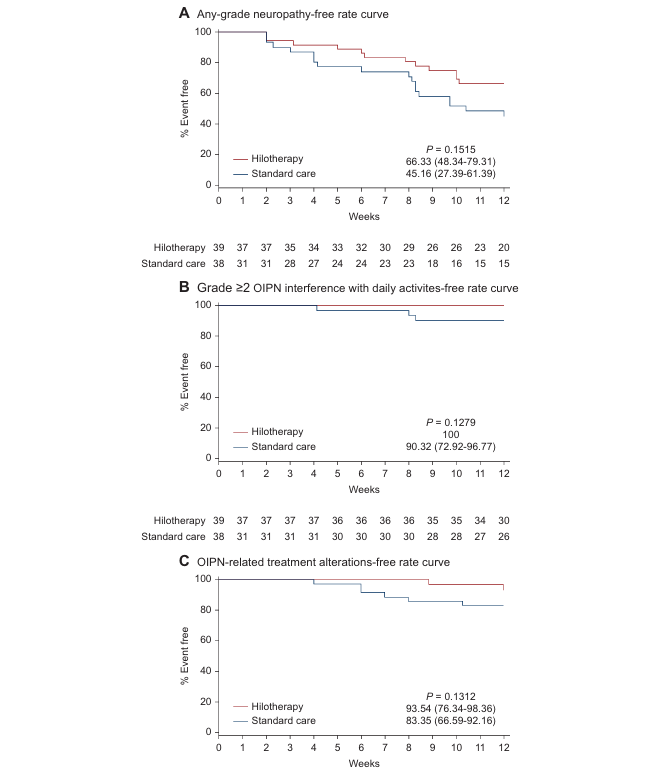
After 12 weeks:
100% of patients receiving hand and foot cooling remained free from grade 2 or higher peripheral neuropathy, compared with 80.5% of patients who did not receive cooling.
This difference was statistically significant.
In simple terms, patients receiving cooling were less likely to develop more significant levels of neuropathy during the first 12 weeks of treatment.
The benefit was still seen at 24 weeks. At this point, 66.0% of patients in the cooling group remained free from grade 2 or higher neuropathy, compared with 49.2% in the control group.
2. Patients experienced fewer acute symptoms
The study also looked at the short-term symptoms that can occur during the first few days after an oxaliplatin treatment.
Patients receiving hand and foot cooling experienced significantly fewer:
Numbness and tingling in their fingers and toes
Pain in their fingers and toes
Cold sensitivity in their fingers and toes
Cold sensitivity in the throat
The differences between the two groups were statistically significant for each of these symptoms.
This is particularly interesting because cold sensitivity is a well-known feature of oxaliplatin treatment. The researchers found that controlled cooling of the hands and feet during treatment was associated with less, rather than more, acute neuropathy symptoms.
3. The cooling was generally well tolerated
Having your hands and feet cooled to 11°C may sound uncomfortable, particularly during chemotherapy.
However, the majority of patients receiving hilotherapy described the cooling as neutral, rather comfortable or very comfortable.
The cooling system provides continuous temperature-controlled cooling rather than relying on frozen gloves that gradually warm up and need to be replaced.
Why are these findings important for patients?
Peripheral neuropathy can be one of the more difficult side effects of oxaliplatin chemotherapy.
Unlike some chemotherapy side effects that disappear relatively quickly after treatment, neuropathy can sometimes continue after chemotherapy has finished. It can affect everyday activities, comfort and quality of life.
The results of this study suggest that hand and foot cooling could be a useful supportive treatment for reducing oxaliplatin-related peripheral neuropathy.
Importantly, this was a randomised controlled trial, meaning patients were randomly assigned to either receive cooling or standard care. This makes the comparison between the two groups more meaningful than simply observing patients who chose to use cooling.
What is the takeaway?
The study provides encouraging evidence that hand and foot cooling during oxaliplatin chemotherapy may help prevent or reduce chemotherapy-induced peripheral neuropathy.
Patients who received continuous cooling experienced:
Less moderate or severe peripheral neuropathy
Less numbness and tingling
Less pain in the fingers and toes
Less cold sensitivity
Less throat-related cold sensitivity
Generally good comfort and tolerance