
Real-World Data: How Controlled Hand-Foot Cooling Protects 94.1% of Breast Cancer Patients from Severe CIPN symptoms
Chemotherapy-induced peripheral neuropathy (CIPN) is an incredibly common and painful adverse effect of taxane-based chemotherapy drugs (like paclitaxel and docetaxel). In traditional breast cancer treatments, up to 50% of patients experience severe nerve damage that interferes with their daily lives.
Because there are limited options to treat nerve damage once it starts, prevention is key. If severe CIPN develops, doctors are often forced to delay chemotherapy doses or cut life-saving treatments short.
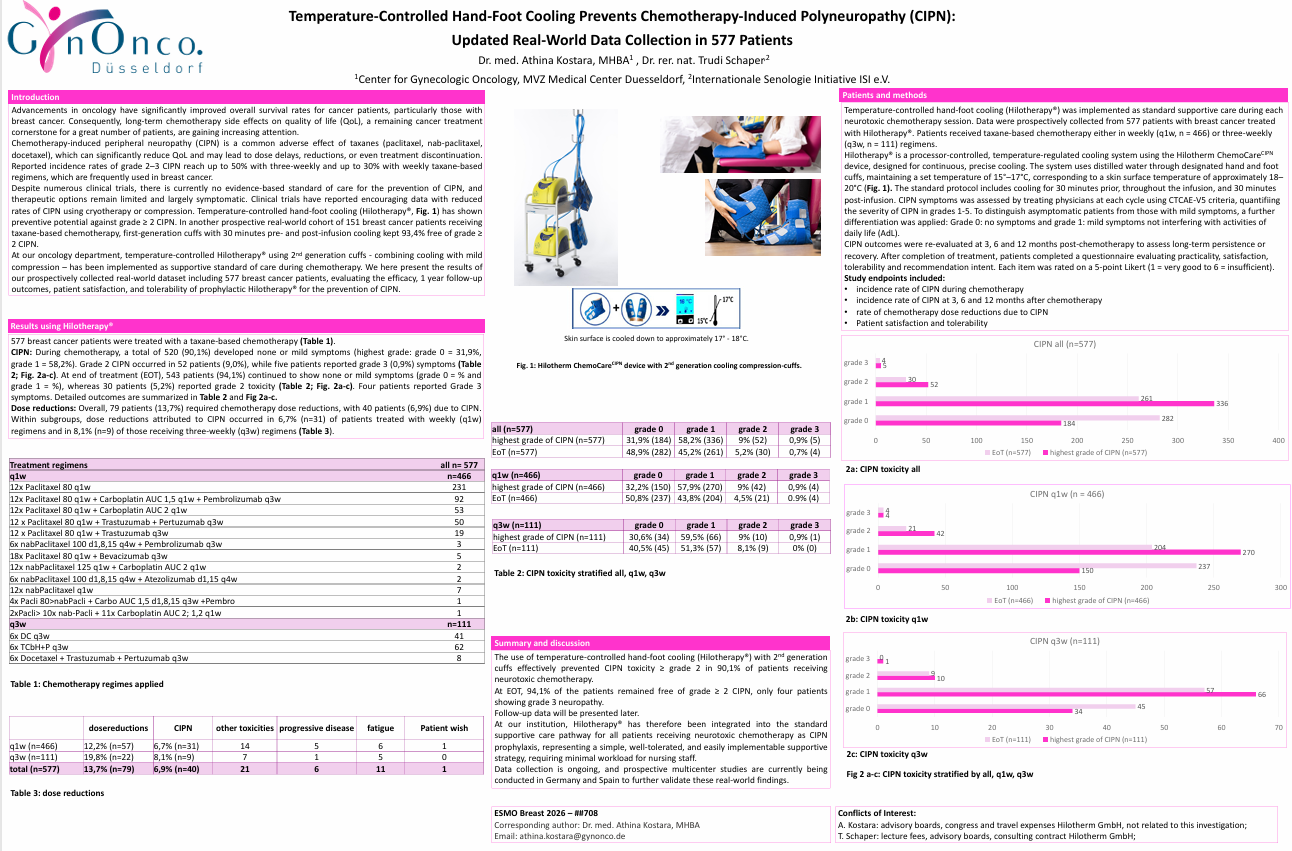
Executive Summary: The Key Findings
This large-scale, real-world study showed that continuous, precise cooling provides incredible protection for nerve endings:
90.1% Protection Rate: An overwhelming 90.1% of patients developed zero or only very mild (Grade 1) nerve symptoms during their entire chemotherapy cycles.
Kept Treatments on Schedule: Only 6.9% of the 577 patients required chemotherapy dose reductions because of nerve issues.
Integrated Safely into standard care: The hospital successfully made Hilotherapy part of its standard care pathway, finding it simple to use with a very minimal workload for nursing staff.
Study Methodology & Patient Details
This prospective study monitored a large group of adult breast cancer patients over their entire treatment cycle and a 1-year follow-up period.
Total Patients: 577 breast cancer patients.
Chemotherapy Regimens: Patients received taxane-based chemotherapy either in weekly cycles (466 patients) or three-weekly cycles (111 patients).
The Cooling Protocol: Hilotherapy was used for 30 minutes before the chemotherapy infusion, throughout the entire infusion, and for 30 minutes afterward. The device kept the skin surface temperature at a precise, comfortable 18–20°C.
Deep Dive into the Results
1. Exceptional Nerve Protection
Medical professionals grade nerve damage (CIPN) from Grade 0 (no symptoms) to Grade 3 (severe symptoms that interfere with basic daily tasks). The Düsseldorf data proved that precise cooling effectively puts a shield around the nerves:
During Treatment: 520 out of 577 patients (90.1%) stayed completely free of severe nerve damage. Specifically, 31.9% had no symptoms at all, and 58.2% had only mild, manageable Grade 1 symptoms.
At the End of Treatment: The success rate grew even higher. By the time patients finished their last chemotherapy cycle, 94.1% were free of severe nerve damage, with almost half the total patient group (48.9%) reporting absolutely zero neuropathy symptoms.
2. Preventing Chemotherapy Interruptions
One of the biggest concerns for oncologists is keeping chemotherapy on schedule to maximize survival rates. Without cooling, many patients have to reduce their medicine doses due to pain and numbness.
With Hilotherapy, only 40 out of 577 patients (6.9%) needed to reduce their chemotherapy doses because of CIPN. The device allowed the vast majority of patients to finish their full, intended cancer treatment safely.
Conclusion: What This Means for Oncologists
The Düsseldorf real-world data collection represents one of the largest datasets available on device-controlled cryotherapy.
The results show that integrating Hilotherm ChemoCare into standard supportive care is a simple, highly effective, and well-tolerated strategy. By successfully preventing severe CIPN in over 90% of patients, this system allows oncology teams to focus on fighting the cancer without being forced to compromise treatment schedules due to debilitating side effects.