
Clinical Evaluation: Controlled Cooling Therapy for CIPN Prevention at The Royal Marsden
Chemotherapy-Induced Peripheral Neuropathy (CIPN) remains one of the most challenging and distressing side effects of systemic anti-cancer therapies (SACT). For patients undergoing treatment with neurotoxic agents like taxanes and platinum-based drugs, CIPN symptoms can range from acute numbness to chronic, debilitating pain.
Beyond the profound impact on a patient’s quality of life, CIPN often forces oncologists to make difficult decisions regarding dose reductions or the premature cessation of treatment. This directly compromises the treatment schedule and can negatively impact long-term patient prognosis.
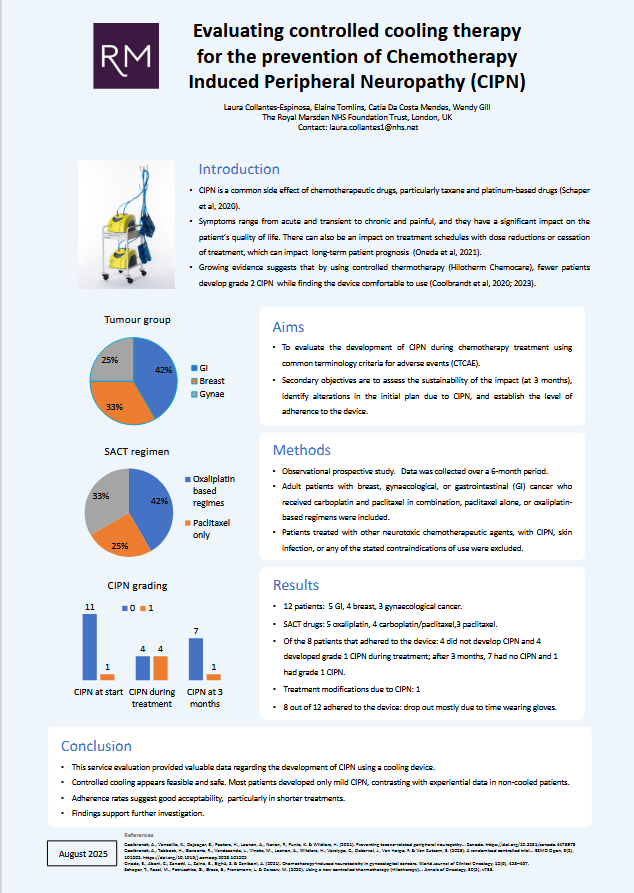
Executive Summary: The Key Findings
The service evaluation demonstrated highly promising neuroprotective results for patients who adhered to the controlled cooling protocol:
100% Mild-to-No Symptoms: Every single patient who adhered to the device developed either zero CIPN or only mild (Grade 1) symptoms during their chemotherapy cycles.
Long-Term Resolution: At the 3-month post-treatment follow-up, 87.5% of the adherent patients (7 out of 8) were entirely free of CIPN.
Maintained Treatment Integrity: Only a single patient across the evaluation required treatment modifications due to CIPN symptoms.
Evaluation Methodology & Patient Cohort
The prospective, observational study was conducted over a 6-month period to monitor the development of CIPN using the Common Terminology Criteria for Adverse Events (CTCAE
Deep Dive into the Results
1. CIPN Severity and Prevention
The primary objective was to observe how controlled cooling affected the grading of CIPN during and after neurotoxic chemotherapy. The data strongly contrasts with historical, experiential data seen in non-cooled oncology patients.
During Treatment: Out of the 8 patients who adhered to the cooling protocol, 4 patients did not develop CIPN at all, and 4 developed only mild, manageable Grade 1 CIPN.
At 3 Months Post-Chemotherapy: The sustainable impact of the therapy was clear. 7 patients had completely returned to a baseline of no CIPN, while only 1 patient maintained a mild Grade 1 status.
2. Patient Adherence & Device Acceptability
A secondary objective of the evaluation was to establish patient compliance and adherence to the device.
Adherence Rate: 8 out of the 12 evaluated patients (66.7%) successfully completed and adhered to the cooling therapy.
PDF
Acceptability Insights: For the patients who did drop out, the primary factor identified was the duration of time spent wearing the cooling gloves. This suggests that acceptability and patient comfort are exceptionally high, particularly during shorter chemotherapy infusion schedules.
Conclusion: What This Means for Oncologists
The Royal Marsden’s evaluation adds to a growing body of international evidence—including randomized controlled trials—supporting the role of controlled thermotherapy in oncology.
The data indicates that continuous, temperature-controlled cooling via Hilotherm ChemoCare is both feasible and safe for clinical deployment. By keeping neuropathic side effects minimal or non-existent, controlled cooling offers a viable clinical pathway to help patients complete their full, optimal SACT regimens without forced dose delays or reductions.